


What Makes a Formal Boot Suitable for a Business Suit? A Technical Guide to Last, Sole and Upper Design
Shipping & Returns
 Free Delivery
 Easy 7 Day Return
 COD Available
A formal boot can work exceptionally well with a business suit, but not every boot belongs in a formal wardrobe. The difference is often found in details that are easy to overlook: the shape of the last, the height and construction of the sole, the leather used for the upper, the lacing system, and the overall visual proportion.
For professionals who prefer boots over conventional dress shoes, these details matter. A well-designed formal boot should complement the clean lines of a tailored suit rather than compete with them. Its construction should provide the required structure and comfort while maintaining a refined silhouette.
This is where choosing between different types of men's formal boots becomes more than a matter of colour or styling. Construction determines how formal a boot looks and how naturally it works with tailored clothing.
The Last Determines the Boot's Formal Profile
The last is the mould around which a shoe or boot is constructed. It determines much of the footwear's shape, including the toe profile, instep, heel position, waist and overall volume.
When pairing a boot with a business suit, the last deserves particular attention because the silhouette of the footwear needs to complement the structure of the trousers.
A formal boot generally benefits from a last with a controlled toe shape rather than an excessively broad or rugged profile. A moderately elongated or refined toe can create a cleaner visual line beneath tailored trousers. This does not mean that a pointed toe is automatically more formal. Excessively sharp shapes can look disconnected from traditional business tailoring.
The relationship between the toe, waist and heel is equally important. A well-proportioned last creates a defined transition from the forefoot towards the waist and heel. This gives the boot a more refined appearance when viewed with suit trousers.
Toe Shape and Suit Proportion
The toe is one of the first areas people notice. Formal boots commonly use plain-toe or cap-toe designs because their restrained appearance works well with business clothing.
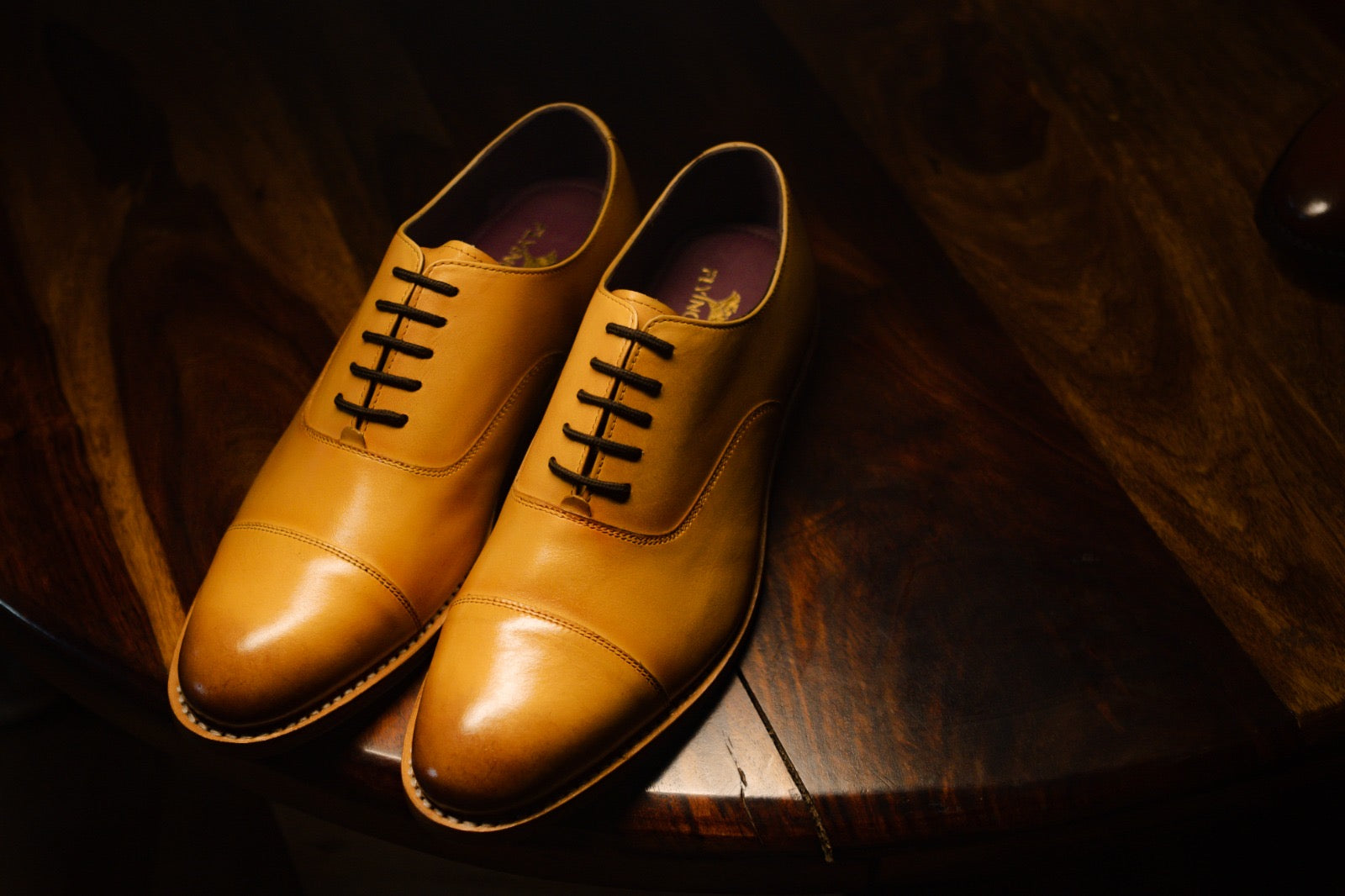
A cap-toe Oxford boot, for example, introduces a horizontal seam across the toe without excessive decoration. This provides visual structure while retaining a conservative appearance.
Brogue detailing can also work with a suit, but the level of ornamentation should match the formality of the clothing. A heavily perforated boot has a more decorative character than a clean cap-toe design.
The key is proportion. A formal boot should look deliberate beneath tailored trousers, not oversized or visually heavy.
Upper Design Controls Formality
The upper is the part of the boot that covers the foot and extends around the sides. Its leather, pattern, construction and finishing have a significant influence on whether a boot looks appropriate with a business suit.
For formal applications, smooth leather is generally easier to integrate with tailored clothing than heavily textured or distressed leather. A clean surface allows the boot to maintain the understated character expected in professional dressing.
Full-grain leather can provide a particularly refined appearance when properly finished. Its natural grain can also develop character with use, making the footwear increasingly distinctive over time.
Colour is another consideration. Black remains one of the most formal choices, particularly with charcoal or darker business suits. Dark brown offers greater flexibility with navy, grey and brown tailoring, while lighter tan shades create a more relaxed appearance.
The finish should also be consistent with the intended use. Highly polished leather can create a sharper formal appearance, whereas an intentionally casual finish may work better with less structured tailoring.
Oxford Construction and Business Formality
The lacing system is another important technical distinction.
Closed-lacing Oxford construction is traditionally associated with formal footwear because the quarters are stitched underneath the vamp. This creates a cleaner appearance across the upper.
An Oxford-style boot essentially applies this formal footwear architecture to a higher boot silhouette. When combined with a refined last, smooth leather and restrained detailing, it can sit naturally alongside a business suit.
Derby construction uses open lacing, with the quarters positioned over the vamp. Derby boots can still be highly refined, but their visual character is generally more relaxed than a comparable Oxford design.
This does not make one construction universally better. The right choice depends on the level of formality required and the rest of the wardrobe.
Why Sole Design Matters
A formal boot can have an excellent leather upper and still appear unsuitable for business wear if its sole is excessively bulky.
Sole thickness changes the visual weight of the entire boot. A thick, heavily lugged outsole is associated more strongly with outdoor or rugged footwear. A comparatively streamlined sole creates a cleaner connection between the boot and tailored trousers.
This is particularly important because suit trousers already create a structured vertical line. A very wide or heavy sole can interrupt that line and make the footwear appear disproportionately large.
The sole should therefore provide adequate support without creating unnecessary bulk.
Leather Soles and Rubber Soles
Leather soles have traditionally been associated with formal footwear because of their slim profile and refined appearance. They can work particularly well for formal indoor environments and carefully selected business settings.
Rubber soles provide advantages in wet conditions and on surfaces where additional traction is useful. However, not every rubber sole has the same visual character. A slim, neatly finished rubber outsole can remain suitable for formal footwear, while a deep lugged sole usually creates a more casual appearance.
For Indian conditions, this distinction becomes particularly relevant. Professionals who regularly commute, travel between meetings or encounter wet weather may prefer the practical characteristics of rubber while still looking for a formal silhouette.
The objective is not simply to choose leather or rubber. It is to consider the complete sole construction and how it interacts with the upper and last.
The Welt Adds Structural Definition
The welt is an important component in traditionally constructed footwear. In Goodyear welted footwear, the upper, insole and welt are connected as part of a construction designed around durability and repairability.
The welt can also influence the visual character of the boot. A neatly finished welt provides a defined edge between the upper and outsole without making the footwear look excessively rugged.
This is one reason Goodyear welted boots can be particularly interesting for buyers who want formal footwear with a substantial construction.
However, the presence of a welt alone does not automatically make a boot formal. Welt width, edge finishing, outsole thickness and last design all contribute to the final appearance.
Upper Height Should Complement the Trousers
The height of a formal boot gives it an advantage over conventional shoes in certain business wardrobes. It provides additional coverage around the ankle while maintaining a shoe-like appearance when designed correctly.
The transition between the boot shaft and trouser opening is important. The boot should not create excessive bunching around the ankle. Trousers with an appropriate break can fall cleanly over a well-shaped boot.
This is particularly effective with streamlined lace-up boots, cap-toe designs and refined Chelsea boots.
The shaft should also avoid excessive decorative features if the intended use is formal business dressing. The cleaner the shaft, the easier it is to integrate with tailored clothing.
Chelsea Boots Can Work With Business Tailoring
Chelsea boots occupy an interesting position between traditional formal footwear and contemporary business dressing.
Their elastic side panels eliminate traditional lacing, creating a clean uninterrupted upper. A refined Chelsea boot with smooth leather, a balanced last and a restrained sole can work well with suits.
The key distinction is between a formal Chelsea boot and a casual Chelsea boot. A chunky outsole, heavily textured leather or exaggerated toe shape can move the design towards casual wear.
For a business wardrobe, the cleaner version is generally more versatile.
Chukka Boots Require More Careful Selection
Chukka boots can also be worn with tailored clothing, but they typically have a less formal character than an Oxford boot.
The result depends heavily on materials and construction. A sleek leather Chukka with a refined last and restrained sole can work with smart business-casual tailoring. A suede Chukka with a casual crepe sole has a distinctly more relaxed character.
This makes the Chukka useful for professionals whose wardrobe extends beyond strict corporate formality.
A refined leather option can bridge the gap between traditional formal shoes and boots without becoming overly conservative.
Colour Should Follow the Suit Rather Than Compete With It
The relationship between boot and suit colour is important because both pieces occupy significant visual space.
Black formal boots are a natural choice for black, charcoal and other darker tailoring. They create a continuous, conservative appearance and are particularly appropriate for formal business environments.
Dark brown boots provide greater versatility. They can complement navy, medium grey and brown suits while adding more visual warmth.
Tan boots are more relaxed. They can work effectively with lighter grey, beige and casual navy tailoring, but they are not always the best choice for conservative corporate environments.
The finish also matters. A highly polished black boot has a very different character from a distressed tan boot, even if both share the same basic construction.

How to Assess a Formal Boot Before Buying
Rather than judging a boot solely by photographs, examine several construction details.
1. Examine the last:
Look for a toe shape and overall profile that are proportionate rather than exaggerated.
2. Check the upper:
Smooth, well-finished leather generally creates a more formal appearance.
3. Study the sole:
Avoid unnecessary bulk if the primary purpose is business tailoring.
4. Inspect the welt:
On Goodyear welted footwear, check whether the welt is cleanly finished and consistently constructed.
5. Consider the lacing:
Closed-lacing Oxford designs generally provide a more formal visual effect than open-lacing Derby designs.
6. Assess the heel:
A proportionate heel supports the boot's silhouette without making it appear like rugged footwear.
7. Consider the suit wardrobe:
Choose the boot according to the colours, cuts and formality levels you already wear.
Formal Boots Should Be Selected as Part of a Wardrobe
A common mistake is to select a formal boot in isolation. The better approach is to consider how it will function across several outfits.
Someone who wears dark business suits throughout the week may benefit from a black cap-toe Oxford boot. Someone with a navy and grey wardrobe may find a dark brown Derby or Oxford boot more versatile.
A professional with a broader smart-casual wardrobe may also benefit from Chelsea or Chukka boots.
This is also where the distinction between formal leather shoes for men and formal boots becomes less rigid. Both can serve the same wardrobe when their construction and proportions are appropriate.
For buyers looking to shop formal leather shoes for men, understanding these construction details helps them assess footwear based on more than appearance. The same principles apply when selecting handmade footwear and when arranging handmade formal shoes delivery India for a wider range of styles.
Why Flying Hawk Focuses on Construction
At Flying Hawk, we approach formal footwear through the relationship between craftsmanship, materials and construction. Our collection includes Goodyear welted designs created for buyers who value structured footwear and long-term ownership. Options such as the Hand Welted Premium Black Oxford, Hand Welted Premium Tan Oxford, Tan Premium Derby Goodyear Welted Shoes, Black Premium Derby Goodyear Welted Shoes and our Goodyear welted Chukka and Chelsea boots offer different levels of formality for business and occasion dressing. Our range also includes the Timber Goodyear Welted Cap Toe Oxford Boots, designed around a formal Oxford-inspired profile. We pay attention to the last, leather, welt, sole and finishing because these elements determine how a boot looks and performs as part of a complete wardrobe. Our Goodyear welted resoling service also supports the long-term maintenance of suitable footwear.
Conclusion
A formal boot is suitable for a business suit when its construction supports the visual discipline of tailored clothing. The last should create a balanced silhouette, the upper should use appropriate leather and restrained detailing, and the sole should provide structure without excessive bulk.
Oxford-style construction generally offers the strongest formal character, while refined Derby, Chelsea and Chukka designs can provide greater versatility depending on their materials and proportions.
The most important point is to evaluate the boot as a complete construction. Toe shape, waist, heel, welt, outsole, leather and finishing all contribute to the final result.
For professionals investing in formal footwear, these details make it easier to distinguish a genuinely refined business boot from a casual boot that simply happens to be made from leather. The right pair should sit naturally beneath tailored trousers, complement the suit rather than overpower it, and provide the construction quality expected from well-made footwear.
Frequently Asked Questions
1. Can formal boots be worn with a business suit?
Yes. Formal boots can be worn with business suits when their last, leather upper, sole profile and overall construction are suitably refined. Cap-toe Oxford boots, sleek Chelsea boots and certain Derby boots can work particularly well with tailored trousers.
2. What type of formal boot is best for a corporate wardrobe?
A refined cap-toe Oxford boot is among the most formal options for a corporate wardrobe. A clean Chelsea boot or streamlined Derby boot can provide greater versatility, particularly when the workplace dress code allows contemporary business footwear.
3. Does Goodyear welted construction make a boot more suitable for formal wear?
Not by itself. Goodyear welted construction relates primarily to how the footwear is assembled and its potential for repair and resoling. Formal suitability also depends on the last, upper design, welt finishing, outsole thickness, toe shape and overall proportions.
4. Are brown formal boots suitable for business suits?
Yes, particularly with navy, grey and brown suits. Dark brown boots are generally more versatile for business dressing, while tan shades create a less formal appearance. Black remains the more conservative choice for formal corporate settings.
5. Should formal boots have leather or rubber soles?
Either can work, depending on the construction and intended use. A slim leather sole offers a traditional formal appearance, while a well-designed rubber sole can provide additional traction and practicality. For regular use in wet conditions, a refined rubber sole can be a practical choice without compromising the overall formal silhouette.
SIZE GUIDE
| Size (UK) |
Size (EU) |
Foot Length (cm) |
|---|---|---|
| 5 | 39 | 24.8 |
| 5.5 | 39.5 | 25.1 |
| 6 | 40 | 25.4 |
| 6.5 | 40.5 | 25.7 |
| 7 | 41 | 26 |
| 7.5 | 41.5 | 26.6 |
| 8 | 42 | 27.3 |
| 8.5 | 42.5 | 27.6 |
| 9 | 43 | 27.9 |
| 9.5 | 43.5 | 28.5 |
| 10 | 44 | 29.2 |
| 10.5 | 44.5 | 29.5 |
| 11 | 45 | 29.8 |
| 11.5 | 45.5 | 30.2 |
| 12 | 46 | 30.5 |
| 12.5 | 46.5 | 30.9 |

- Choosing a selection results in a full page refresh.
- Opens in a new window.